
- Publisher
- W. W. Norton & Company
- Published
- 2006
- Pages
- 464
- ISBN
- 9780393327953
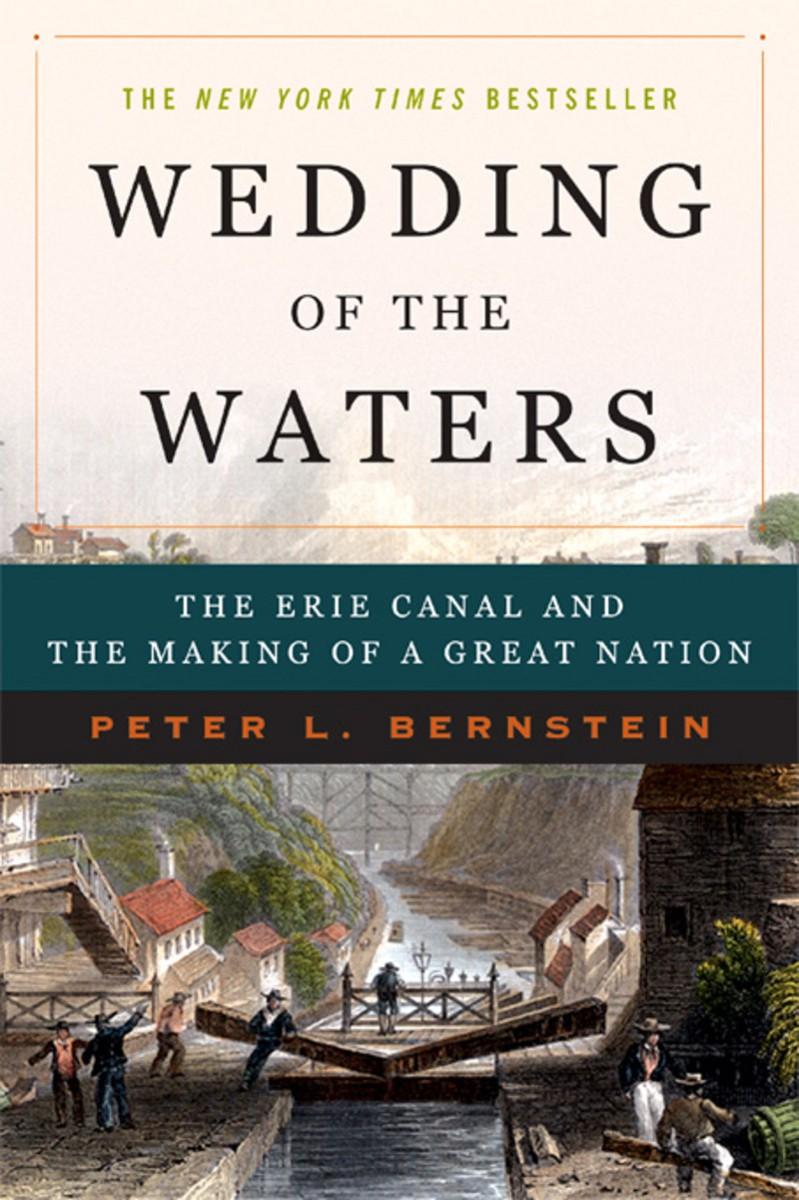
Wedding of the Waters
The Erie Canal and the Making of a Great Nation
Add this book to a shelf to choose who sees itShare this book
The history of the Erie Canal is a riveting story of American ingenuity. A great project that Thomas Jefferson judged to be “little short of madness,” and that others compared with going to the moon, soon turned into one of the most successful and influential public investments in American history. In Wedding of the Waters, best-selling author Peter L. Bernstein recounts the canal’s creation within the larger tableau of a youthful America in the first quarter-century of the 1800s. Leaders of the fledgling nation had quickly recognized that the Appalachian mountain range was a formidable obstacle to uniting the Atlantic states with the vast lands of the west. A pathway for commerce as well as travel was critical to the security and expansion of the Revolution’s unprecedented achievement. Gripped by the same fever that had driven explorers such as Hudson and Champlain, a motley assortment of politicians, surveyors, and would-be engineers set out to build a complex structure of a type few of them had ever actually seen, let alone built or operated: a manmade waterway cut through the mountains to traverse the 363 miles between Lake Erie and the Hudson River. By linking the seas to the interior and the interior to the seas, these pioneers ultimately connected the Atlantic Ocean to the Mississippi River. Bernstein examines the social ramifications, political squabbles, and economic risks and returns of this mammoth project. He goes on to demonstrate how the canal’s creation helped bind the western settlers in the new lands to their fellow Americans in the original colonies, knitted the sinews of the American industrial revolution, and even influenced profound economic change in Europe. Featuring a rich cast of characters that includes political visionaries like George Washington, Thomas Jefferson, and Martin van Buren; the canal’s most powerful champions, Governor DeWitt Clinton and Gouverneur Morris; and a huge platoon of Irish and American diggers, Wedding of the Waters reveals that the twenty-first-century themes of urbanization, economic growth, and globalization can all be traced to the first great macroengineering venture of American history.
The conversation
Between readers
No one's reviewed this one yet. Be the first.
In print
Reviews elsewhere
“Stretching 363 miles from Buffalo on Lake Erie to Albany on the Hudson River, the Erie Canal was the technological marvel of its age.”
Kirkus Reviews · May 19, 2010Read the full review(opens Kirkus Reviews in a new tab) “Bernstein resists the temptation to say…that the Erie canal ‘changed the world,’ but it did. It is almost impossible to imagine what the country would be like had it not been built. Peter Bernstein does it full justice.”
Washington Post, Jonathan YardleyRead the full review(opens Washington Post in a new tab) “Bernstein’s economic analysis lucidly conveys the enormous impact of the Erie Canal and explains its crucial role in bringing about the industrial emergence of the young nation.”
Keep reading