- Publisher
- W. W. Norton & Company
- Published
- 2015
- Pages
- 352
- ISBN
- 9780393351927
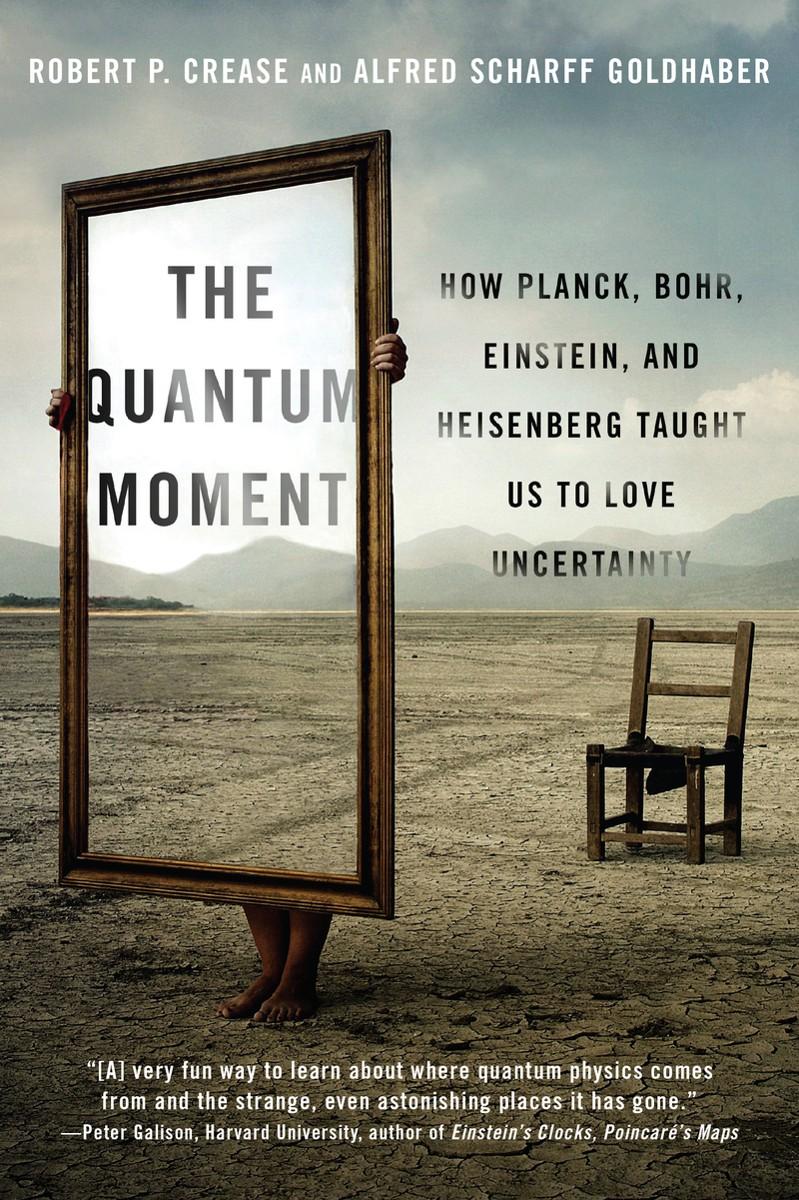
The Quantum Moment
How Planck, Bohr, Einstein, and Heisenberg Taught Us to Love Uncertainty
Add this book to a shelf to choose who sees itShare this book
From multiverses and quantum leaps to Schrödinger’s cat and time travel, quantum mechanics has irreversibly shaped the popular imagination. Entertainers and writers from Lady Gaga to David Foster Wallace take advantage of its associations and nuances. In The Quantum Moment, philosopher Robert P. Crease and physicist Alfred Scharff Goldhaber recount the fascinating story of how the quantum jumped from physics into popular culture, with brief explorations of the underlying math and physics concepts and descriptions of the fiery disputes among figures including Einstein, Schrödinger, and Niels Bohr. Understanding and appreciating quantum imagery, its uses and abuses, is part of what it means to be an educated person in the twenty-first century. The Quantum Moment serves as an indispensable guide.
Your rating
- Publisher
- W. W. Norton & Company
- Published
- 2015
- Pages
- 352
- ISBN
- 9780393351927
The conversation
Between readers
No one's reviewed this one yet. Be the first.
In print
Reviews elsewhere
“An entertaining read…[The Quantum Moment] asks why quantum theory carries such a metaphorical punch…and why it seems to be rediscovered in every generation.”
Nature, Jim BaggottRead the full review(opens Nature in a new tab) “Rich and entertaining…[The Quantum Moment] is an introduction to the brave new world we inhabit.”
New York Times, Amir AlexanderRead the full review(opens New York Times in a new tab) “Approachable…[and] entertaining…Crease and Goldhaber detail in mostly demotic terms and chipper tones the history of quantum physics, its main concepts, its discoverers, its prominent detractors (Einstein among them), and its subsequent jargonization—how and why phrases like quantum leap and uncertainty principle have escaped the highly technical shackles of the scientific lexicon to become…”