- Publisher
- Thames and Hudson
- Published
- 2018
- Pages
- 160
- ISBN
- 9780500239698
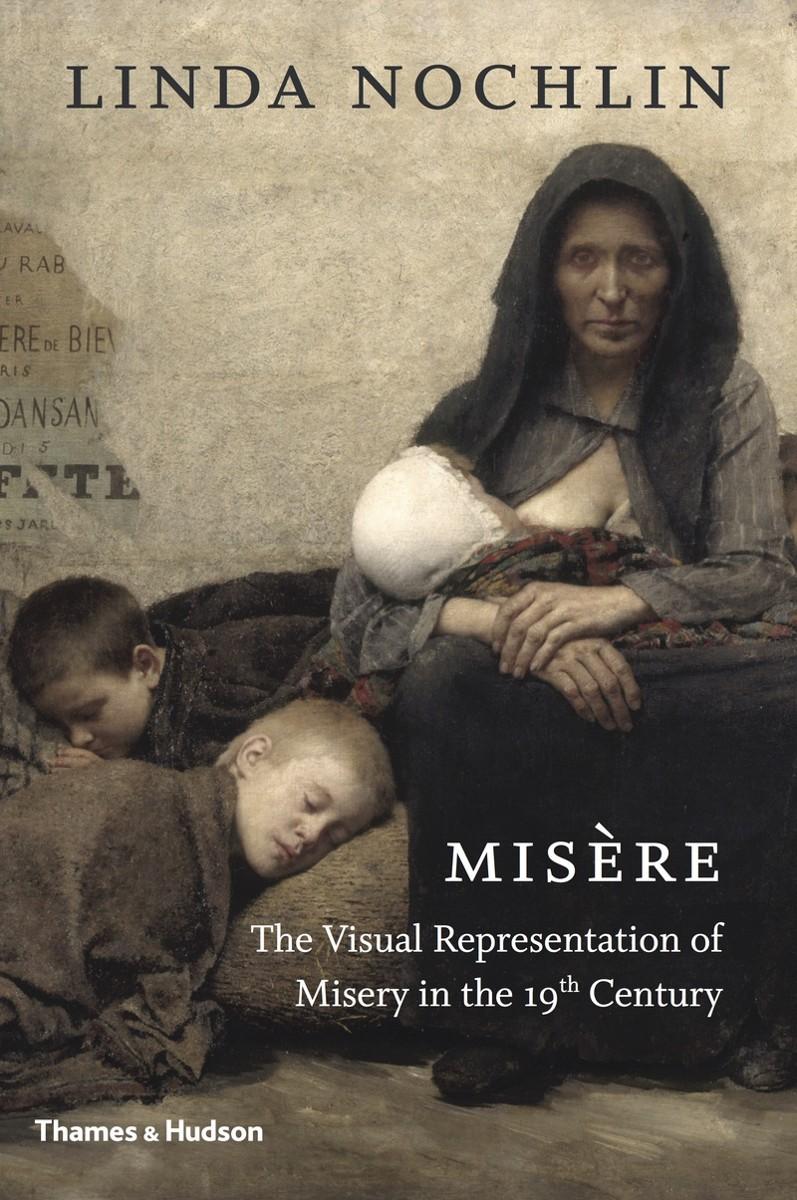
Misère
The Visual Representation of Misery in the 19th Century
Add this book to a shelf to choose who sees itShare this book
In Misère, famed art historian Linda Nochlin reveals how, in the new form of civilization produced by the Industrial Revolution, in which the phenomenal growth of wealth occurred alongside an expansion of squalor, writers and artists of the nineteenth century used their craft to come to terms with what were often new and unprecedented social, material, and psychological circumstances. Nochlin charts the phenomenon of misery as it was represented in the popular and fine arts of the nineteenth century. Examining work by some of the great intellects of the era—including Dickens, Carlyle, Engels, Hugo, Buret, Disraeli, and de Tocqueville—as well as relative unknowns who were searching for ways to depict new realities, Nochlin draws from a range of sources that include paintings, prints, newspaper illustrations, photography, and a variety of texts: from the account of a day in the life of an eight-year-old mine worker girl to the foundational texts of the field such as Friedrich Engels’s The Condition of the Working Class in England.
Your rating
- Publisher
- Thames and Hudson
- Published
- 2018
- Pages
- 160
- ISBN
- 9780500239698
The conversation
Between readers
No one's reviewed this one yet. Be the first.
In print
Reviews elsewhere
“What endures in this final book is a fixation with the past as a portal to present misères, whether persistent gender inequalities or economic disparities as extreme as those of the industrial age.…”
The New York Times Book ReviewRead the full review(opens The New York Times Book Review in a new tab) “Inspired in part by the broadening gap between rich and poor in the U.S., this succinct and insightful book makes 19th-century social injustice uncannily relevant today… Nochlin illuminates the largely unexplored field of 19th-century drawings, paintings, and photography [and examines] pathos-laden images, from simple illustrations that ran in newspapers to paintings by such artists as Goya,…”
Publishers WeeklyRead the full review(opens Publishers Weekly in a new tab)
Keep reading