But Who Am I, and Who Are My People?
A Rabbi's Reflections on the Rabbinate and the Jewish Community
Rabbi Dr. Marc D. Angel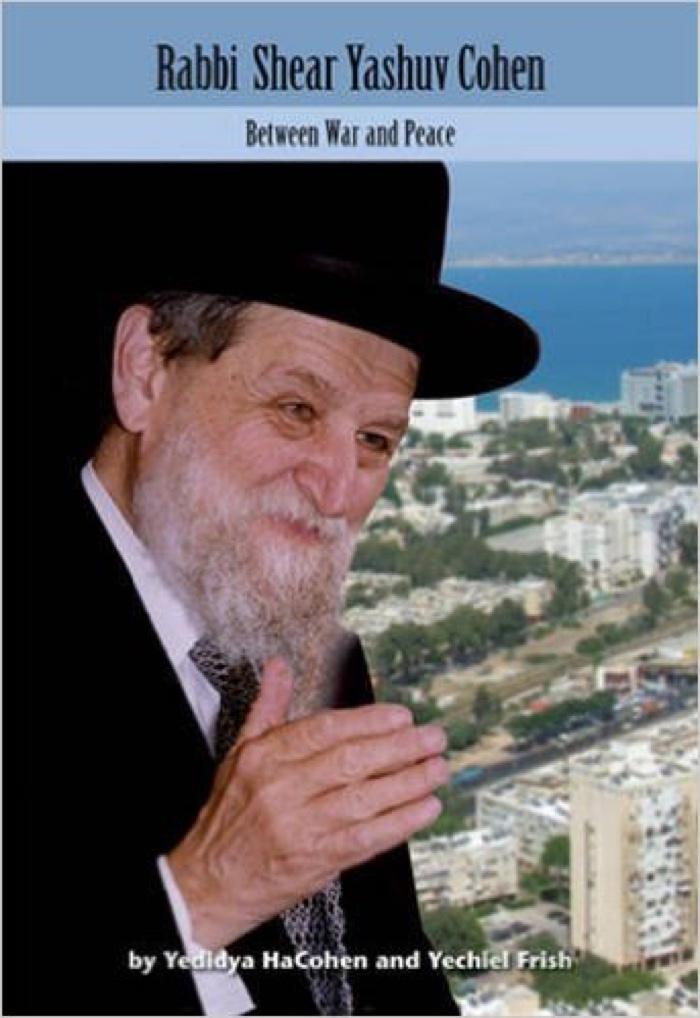
Between War and Peace
Although mainly known as the Chief Rabbi of Haifa, Rabbi Shear Yashuv Cohen (1927-2016) has lived an intriguing life, playing an important role in the establishment of the State of Israel. As the son of Rabbi David Cohen (1887-1972), the legendary Nazirite of Jerusalem, Rabbi Cohen grew up among some of Israel's greatest rabbis. Destined to become a Nazirite until the age of sixteen, Rabbi Shear Yashuv Cohen studied under the influence of Rav Kook. During the 1948 War of Independence, Rabbi Cohen fought to defend the Old City of Jerusalem, until he was severely wounded and taken to Jordan as a prisoner of war. After his return he became Chief Rabbi of the Israel Air Force, and then governed as the Deputy Mayor of Jerusalem with Teddy Kollek. Rabbi Shear Yashuv Cohen took special pride in founding and developing the Ariel branch of the Harry Fischel Institute, where he introduced a structured program for the preparation of Community Rabbis and Rabbinical Judges. This was a revolutionary concept in Israel at the time. He accepted the mantle of Chief Rabbi of Haifa (1975-2011) in order to provide an example to his students. At the same time, he also served as President of the Haifa rabbinical courts. The details of his achievements and captivating life are further encapsulated in excerpts of his diary, which include vivid details of the battles in which he fought, culminating in his imprisonment in Jordan. Rabbi Shear Yashuv Cohen was also a leading rabbinic representative for inter-religious dialogue, first with the Roman Catholic Church and, more latterly, with the Church of England.
The conversation
No one's reviewed this one yet. Be the first.
Keep reading
A Rabbi's Reflections on the Rabbinate and the Jewish Community
Rabbi Dr. Marc D. Angel
A Biography of Rabbi Alexander Schindler
Michael A. Meyer, Jonathan D. Sarna, Rabbi Rick Jacobs

The Life and Teachings of Menachem M. Schneerson, the Most Influential Rabbi in Modern History
Rabbi Joseph Telushkin