- Publisher
- W. W. Norton & Company
- Published
- 2021
- Pages
- 464
- ISBN
- 9780393868456
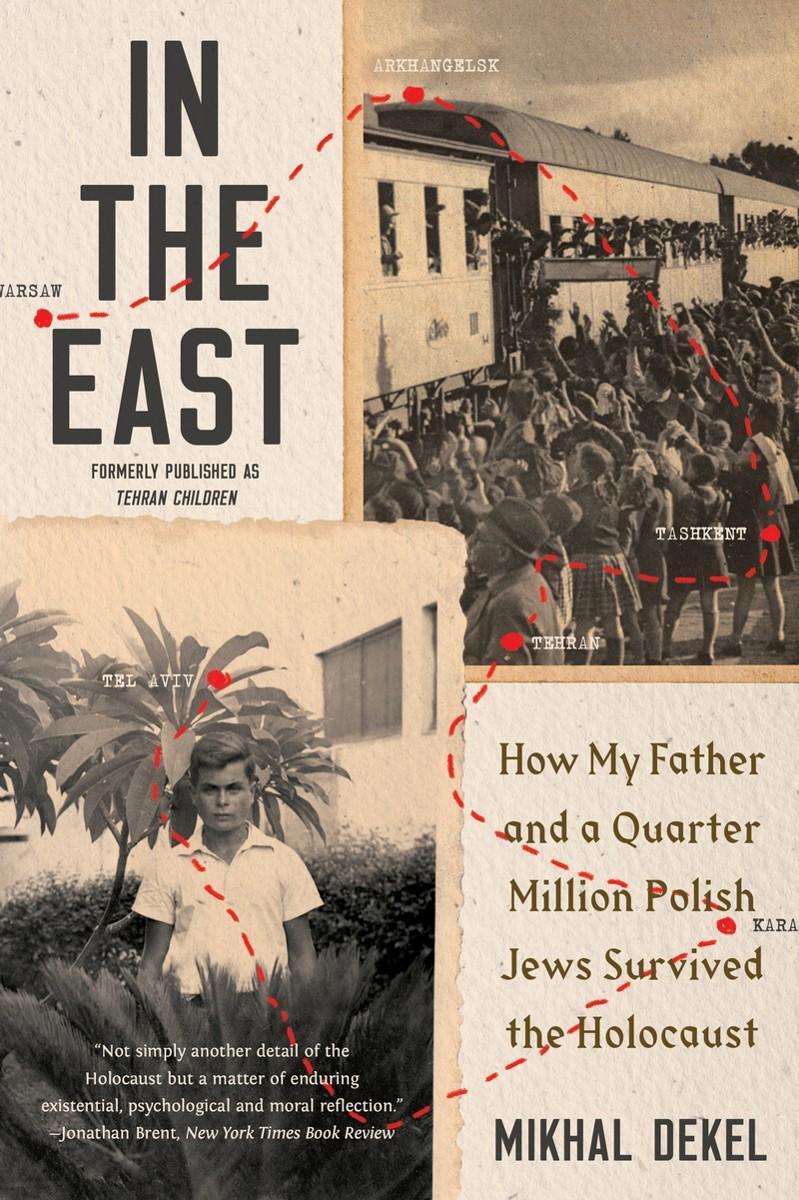
In the East
How My Father and a Quarter Million Polish Jews Survived the Holocaust
by Mikhal Dekel
Add this book to a shelf to choose who sees itShare this book
Despite decades of outstanding writing about the Holocaust, the full story of roughly a quarter million Jews who survived Nazi extermination in the Soviet interior, Central Asia, and the Middle East is nearly unknown, even to their descendants. Investigating her late father’s mysterious identity as a “Tehran Child,” literary scholar Mikhal Dekel delved deep into archives —including Soviet files not previously available to Western scholars—on three continents. She pursued the path of these Holocaust refugees from remote Kolyma in Siberia to Tashkent in Uzbekistan and, with the help of an Iranian friend and colleague, to Tehran. It was there that her father, aunt, and nearly a thousand other Jewish refugee children survived the war. Dekel’s part-memoir, part-history, part-literary-political reflection on fate, identity, and memory uncovers the lost story of Jewish refuge in Muslim lands, the complex global politics behind whether refugees live or die, and the collective identity-creation that determines the past we remember.
Your rating
- Publisher
- W. W. Norton & Company
- Published
- 2021
- Pages
- 464
- ISBN
- 9780393868456
The conversation
Between readers
No one's reviewed this one yet. Be the first.
In print
Reviews elsewhere
“The story at the center of this book is the way contingency shaped so many destinies. It makes these Tehran children not simply another detail of the Holocaust but a matter of enduring existential, psychological and moral reflection.”
New York Times Book Review, Johnathan BrentRead the full review(opens New York Times Book Review in a new tab) “The backstory about how Dekel, now a professor of comparative literature in the U.S., began researching this project with an Iranian colleague, adds an interesting personal aspect to this work of excellent scholarship and a harrowing history illuminating both the specifics of the past and the universal aspects of the refugee experience.”
Booklist, Dan KaplanRead the full review(opens Booklist in a new tab)
Keep reading