
- Publisher
- Academic Studies PRess
- Published
- 2012
- Pages
- 174
- ISBN
- 9781306150231
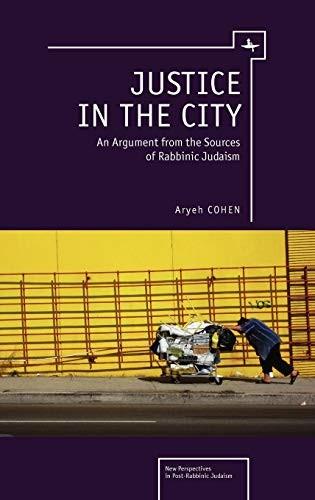
Justice in the City
an Argument from the Sources of Rabbinic Judaism
Add this book to a shelf to choose who sees itShare this book
Justice in the City argues, based on the rabbinic textual tradition, especially the Babylonian Talmud, and utilizing French Jewish philosopher Emmanuel Levinas' framework of interpersonal ethics, that a just city should be a community of obligation. That is, in a community thus conceived, the privilege of citizenship is the assumption of the obligations of the city towards Others who are not always in view--workers, the poor, the homeless. These Others form a constitutive part of the city. The second part of the book is a close analysis of homelessness, labor, and restorative justice from within the theory that was developed. This title will be useful for scholars and students in Jewish studies, especially rabbinic literature and Jewish thought, but also for those interested in contemporary urban issues.
Your rating
- Publisher
- Academic Studies PRess
- Published
- 2012
- Pages
- 174
- ISBN
- 9781306150231
The conversation
Between readers
No one's reviewed this one yet. Be the first.
Keep reading
More by Rabbi Aryeh Cohen
Keep reading

Early Years
The Formative Years of the Rebbe, Rabbi Menachem M. Schneerson, 1902-1929: Exploring the Life of Rabbi Menachem M. Schneerson As Told by Documents and Archival Data
Boruch Oberlander, Elkanah Shmotkin5(1)reviews