The holocaust in history and today
three public lectures
Rabbi Jonathan Sacks zt"l, Steven J. Zipperstein, I. Finestein zt"l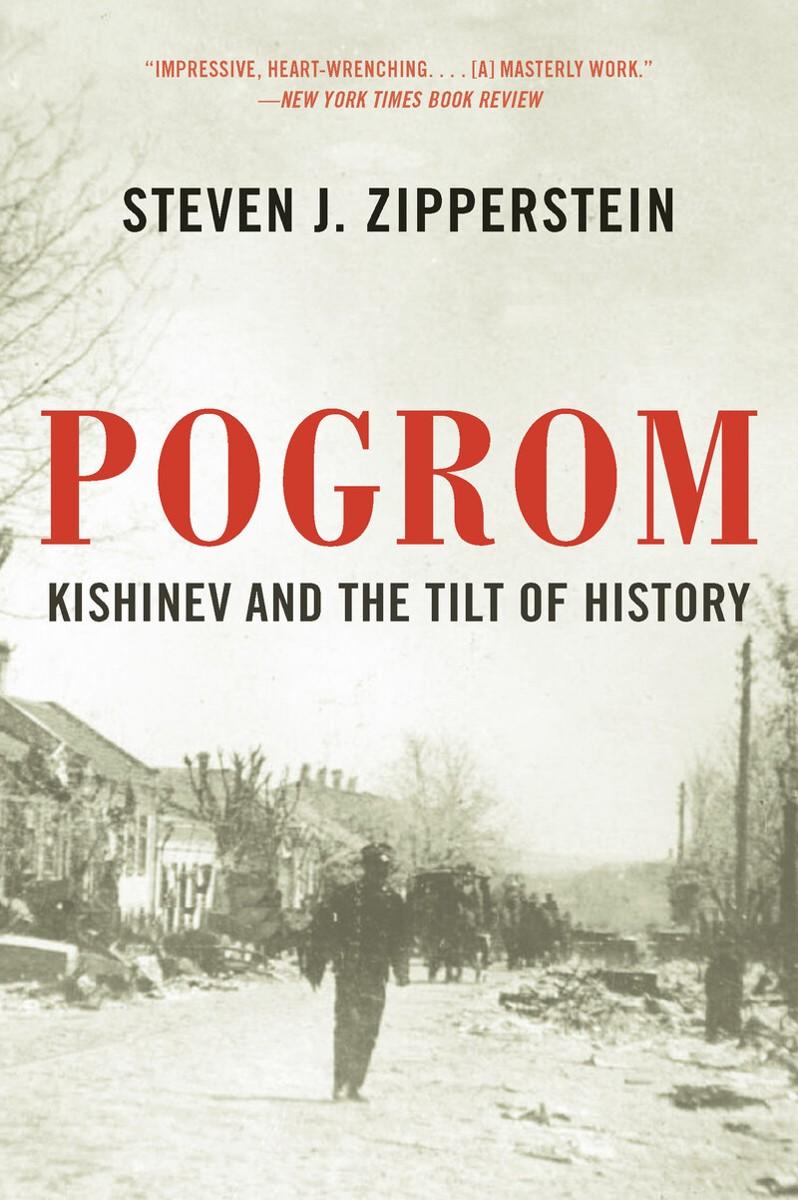
Kishinev and the Tilt of History
So shattering were the aftereffects of Kishinev, the rampage that broke out in late-Tsarist Russia in April 1903, that one historian remarked that it was “nothing less than a prototype for the Holocaust itself.” In three days of violence, 49 Jews were killed and 600 raped or wounded, while more than 1,000 Jewish-owned houses and stores were ransacked and destroyed. Recounted in lurid detail by newspapers throughout the Western world, and covered sensationally by America’s Hearst press, the pre-Easter attacks seized the imagination of an international public, quickly becoming the prototype for what would become known as a “pogrom,” and providing the impetus for efforts as varied as The Protocols of the Elders of Zion and the NAACP. Using new evidence culled from Russia, Israel, and Europe, distinguished historian Steven J. Zipperstein’s wide-ranging book brings historical insight and clarity to a much-misunderstood event that would do so much to transform twentieth-century Jewish life and beyond.
The conversation
No one's reviewed this one yet. Be the first.
In print
“A wave of mob-led massacres — pogroms — swept across the Pale of Settlement in Russia in the early 1880s, reaching hundreds of shtetls.”
“As Zipperstein (Jewish Culture and History/Stanford Univ.; Imagining Russian Jewry, 2015, etc.) shows, the April 1903 pogrom at Kishinev was neither the first nor the last atrocity against the Jews, but it stands out for a number of reasons.”
“The methodical slaughter of forty-nine Jews on the streets of Kishinev, the capital of Moldova, over the course of three days in April, 1903, was a pivotal event in the history of modern anti-Semitism, the rise of Zionism, and, as a symbol of racist violence, a catalyst for the rise of the N.A.A.C.P.…”
Keep reading
three public lectures
Rabbi Jonathan Sacks zt"l, Steven J. Zipperstein, I. Finestein zt"lKeep reading
A collection of classic and inspirational writings of Torah personalities
Moshe Bamberger5(1)reviews
“A re-examination of one of the most lavishly remembered events of Russian Jewish history that is also the most edited and misunderstood. . . . Looking for a cause of the massacre, the author points to Pavel Krushevan, an anti-Semitic local publisher whose publications were rife with blood libel.…”