- Publisher
- Liveright Publishing Corporation, a division of W.W. Norton & Company
- Published
- 2020
- Pages
- 384
- ISBN
- 9781631498008
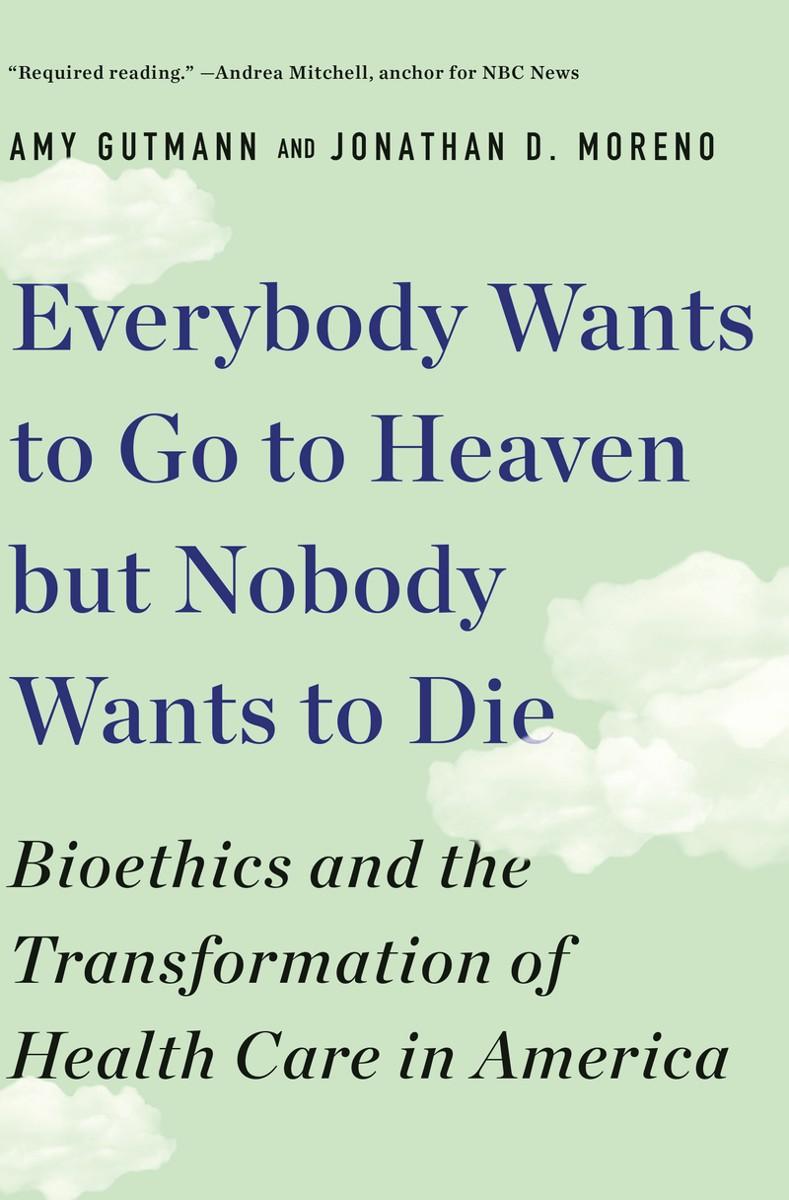
Everybody Wants to Go to Heaven but Nobody Wants to Die
Bioethics and the Transformation of Health Care in America
Add this book to a shelf to choose who sees itShare this book
Shockingly, the United States has among the lowest life expectancies and highest infant mortality rates of any high-income nation, yet, as Amy Gutmann and Jonathan D. Moreno show, we spend twice as much per capita on medical care without insuring everyone. A “remarkable, highly readable journey” (Judy Woodruff ) sure to become a classic on bioethics, Everybody Wants to Go to Heaven but Nobody Wants to Die explores the troubling contradictions between expanding medical research and neglecting human rights, from testing anthrax vaccines on children to using brain science for marketing campaigns. Providing “a clear and compassionate presentation” (Library Journal) of such complex topics as radical changes in doctor-patient relations, legal controversies over in vitro babies, experiments on humans, unaffordable new drugs, and limited access to hospice care, this urgent and incisive history is “required reading for anyone with a heartbeat” (Andrea Mitchell).
Your rating
- Publisher
- Liveright Publishing Corporation, a division of W.W. Norton & Company
- Published
- 2020
- Pages
- 384
- ISBN
- 9781631498008
The conversation
Between readers
No one's reviewed this one yet. Be the first.
In print
Reviews elsewhere
“Targeting a general audience, this title provides a clear and compassionate presentation of complicated topics and how important it is to confront them.”
Library JournalRead the full review(opens Library Journal in a new tab) “[Gutmann and Moreno] vividly explore the complexity of the ethical principles underlying scientific advances and emerging medical treatments.... Part cultural history, part philosophical enquiry, and part gentle polemic, this valuable survey should become prescribed reading for America’s healthcare practitioners.”
Publishers WeeklyRead the full review(opens Publishers Weekly in a new tab) “Astute…. illuminating…. Gutmann and Moreno lucidly outline the differences between earlier eras in medicine, when a doctor’s 'implicit permission to mislead, if not to lie outright' was openly accepted, and contemporary medicine, where healthier food 'choice architecture' and mental health system reforms are just two examples of the radical shift in perception and patient self-empowerment.…”