- Publisher
- W. W. Norton & Company
- Published
- 2023
- Pages
- 320
- ISBN
- 9780393866575
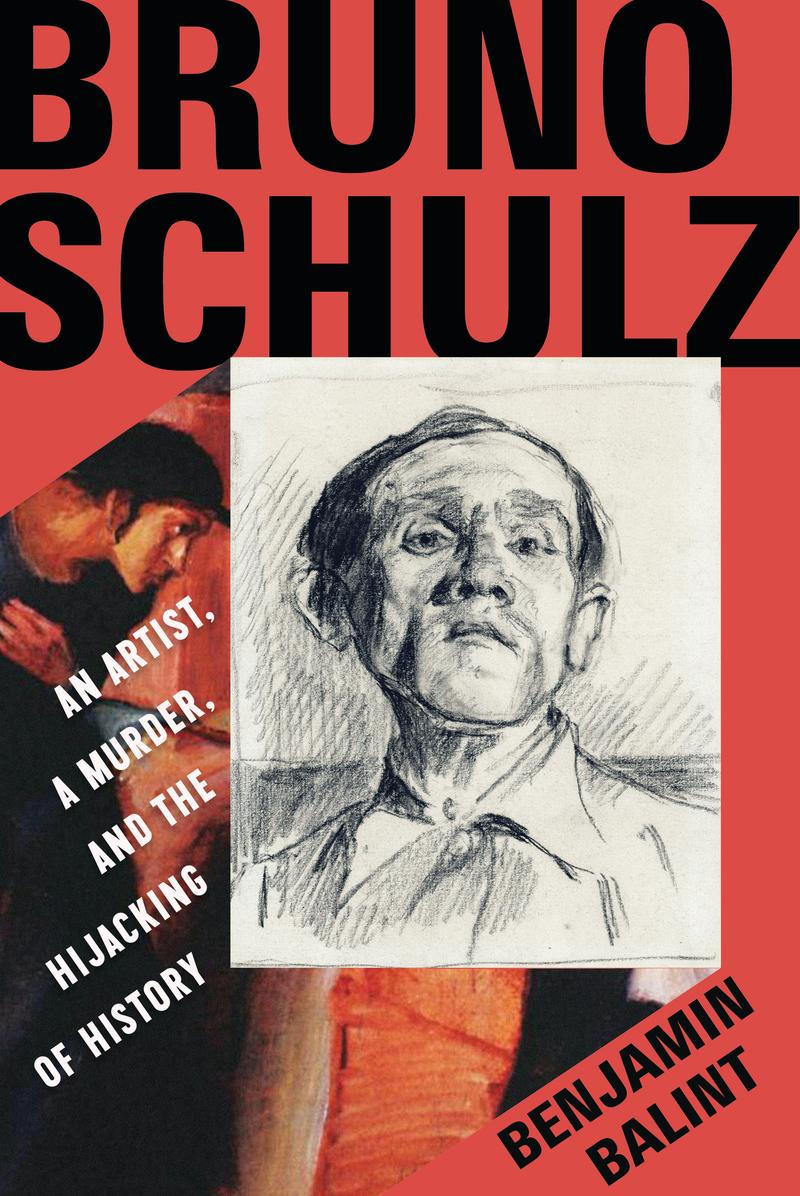
Bruno Schulz
An Artist, a Murder, and the Hijacking of History
Add this book to a shelf to choose who sees itShare this book
The twentieth-century artist Bruno Schulz was born an Austrian, lived as a Pole, and died a Jew. First a citizen of the Habsburg monarchy, he would, without moving, become the subject of the West Ukrainian People’s Republic, the Second Polish Republic, the USSR, and, finally, the Third Reich. Yet to use his own metaphor, Schulz remained throughout a citizen of the Republic of Dreams. He was a master of twentieth-century imaginative fiction who mapped the anxious perplexities of his time; Isaac Bashevis Singer called him “one of the most remarkable writers who ever lived.” Schulz was also a talented illustrator and graphic artist whose masochistic drawings would catch the eye of a sadistic Nazi officer. Schulz’s art became the currency in which he bought life. Drawing on extensive new reporting and archival research, Benjamin Balint chases the inventive murals Schulz painted on the walls of an SS villa—the last traces of his vanished world—into multiple dimensions of the artist’s life and afterlife. Sixty years after Schulz was murdered, those murals were miraculously rediscovered, only to be secretly smuggled by Israeli agents to Jerusalem. The ensuing international furor summoned broader perplexities, not just about who has the right to curate orphaned artworks and to construe their meanings, but about who can claim to stand guard over the legacy of Jews killed in the Nazi slaughter. By re-creating the artist’s milieu at a crossroads not just of Jewish and Polish culture but of art, sex, and violence, Bruno Schulz itself stands as an act of belated restitution, offering a kaleidoscopic portrait of a life with all its paradoxes and curtailed possibilities.
The conversation
Between readers
No one's reviewed this one yet. Be the first.
In print
Reviews elsewhere
“Balint tells this story—which turns out to be multiple stories, obscured by the fog of war and rumor’s sfumato—and virtuosically relates them to Schulz’s own tales, while providing the clearest, most evenhanded account to date of the tangled afterlife of the Master of Drohobych.... [Balint is] an unflaggingly curious and fastidious critic....…”
New York Times Book Review (Editors' Choice), Joshua CohenRead the full review(opens New York Times Book Review (Editors' Choice) in a new tab) “Offers not just an astute biographical portrait but an investigation into the contested rituals of remembrance.... Balint’s meticulous account of the ‘fresco fiasco,’ which saw Schulz’s last works forcibly claimed by the Israeli state, raises grave issues about ‘the stewardship of suffering.’”
Wall Street Journal, Boyd TonkinRead the full review(opens Wall Street Journal in a new tab)
Keep reading
More by Benjamin Balint
Keep reading
Early Years
The Formative Years of the Rebbe, Rabbi Menachem M. Schneerson, 1902-1929: Exploring the Life of Rabbi Menachem M. Schneerson As Told by Documents and Archival Data
Boruch Oberlander, Elkanah Shmotkin5(1)reviews